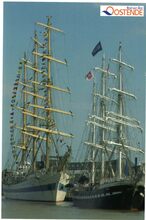
Tropic T 543. - (Oostende voor Anker)
Geavanceerd zoeken
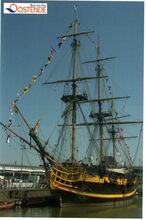
Tropic T 542. - (Oostende voor Anker)
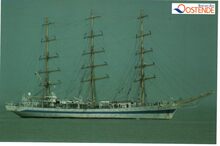
Tropic T 541. - (Oostende voor Anker)
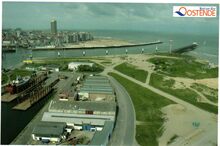
Tropic T 540. - (Oostende voor Anker). - Luchtfoto van de Oosteroever en de havengeul. Vooraan, de scheepswerf Seghers en links, de slipway
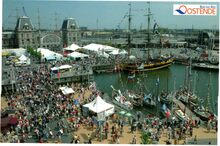
Tropic T 539. - (Oostende voor Anker). - Zicht op het eerste handelsdok en het stationsplein met het Zeestation
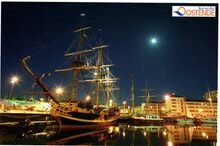
Tropic T 538. - (Oostende voor Anker). - Nachtopname van het zeilschip "Grand Turk" in het eerste handelsdok. Rechts, het Stedelijk Technisch Instituut voor Handel Industrie en Hotelwezen.
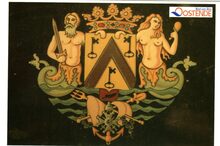
Tropic T 537. - (Oostende voor Anker)
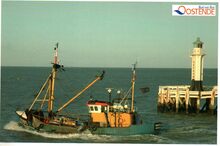
Tropic T 536. - (Oostende voor Anker)
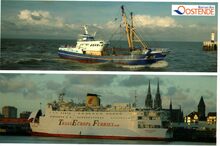
Tropic T 535. - (Oostende voor Anker). - Multikaart. - (1) De Z.45 Stephanie nadert de havengeul van Oostende. (2) De carferry "Eurovoyager" (ex "Prins Albert") van Trans Europa Ferries aangemeerd in de haven. Op de achtergrond, rechts, de toren, genaamd de "Peperbusse", van de door brand vernielde Sint-Pieterskerk en de torens van de Sint Petrus en Pauluskerk.
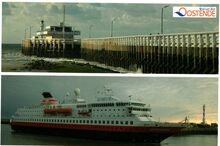
Tropic T 534. - (Oostende voor Anker). - Multikaart. - (1) Het einde van het Weststaketsel, of "'t koptje van 't hooft". Met het café-paviljoen. Nu, 2022 afgebroken ; en (2) het cruiseschip "Nordnorge" in de havengeul van Oostende
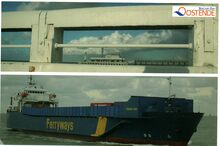
Tropic T 532. - (Oostende voor Anker). - Multikaart. - (1) Zicht vanaf het Weststaketsel. We zien het einde van het Ooststaketsel met tijseinpost. Bestaat niet meer en ; (2) het ro-ro vrachtschip "Ipswich Way" van de rederij Ferryways.
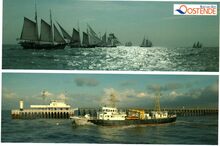
Tropic T 533. - (Oostende voor Anker). - Multikaart
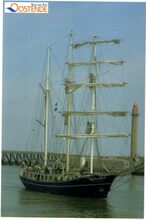
Tropic T 519. - (Oostende voor Anker). - Het zeilschip "Thalassa" in de havengeul van Oostende. Op de achtergrond, de radartoren op de oosteroever nabij de Halve Maan. Afgebroken in september 2019 in het plan voor de verbreding van de havengeul. De nieuwe radartoren staat nu op de kop van de oostelijke strekdam.
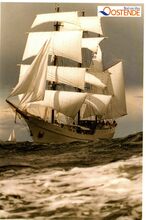
Tropic T 477. - (Oostende voor Anker)
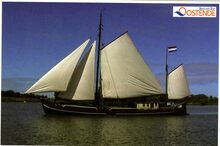
Tropic T 476. - (Oostende voor Anker)
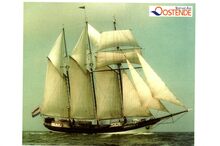
Tropic T 475. - (Oostende voor Anker)
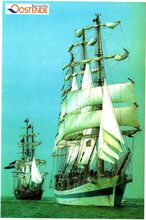
Tropic T 473. - (Oostende voor Anker)
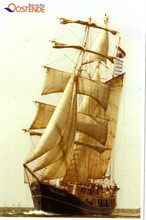
Tropic T 474. - (Oostende voor Anker)
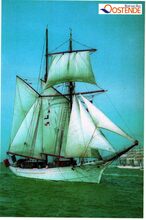
Tropic T 472. - (Oostende voor Anker)
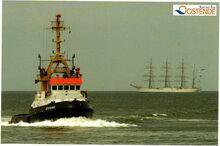
Tropic T 471. - (Oostende voor Anker)
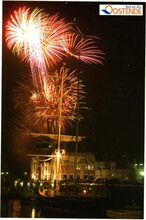
Tropic T 470. - (Oostende voor Anker). - Vuurwerk
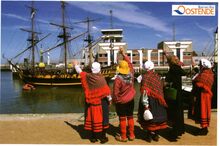
Tropic T 469. - (Oostende voor Anker). - Enkele leden van de "Vismijnvrienden" zwaaien naar het zeilschip "Grand Turk" die voorbijvaart in het Montgomerydok
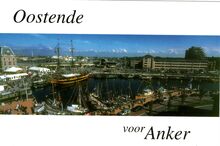
Tropic T 468. - (Oostende voor Anker). - Luchtopname met het zeilschip "Grand Turk" in het eerste handelsdok tijdens Oostende voor Anker. In het midden, het trramstatio. Rechts, het Stedelijk Technisch Instituut voor Industrie Handel en Hotelwezen. Links, detail van het Zeestation
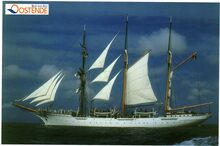
Tropic T 467. - (Oostende voor Anker)
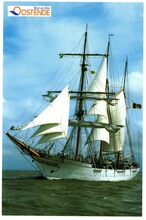
Tropic T 417. - (Oostende voor Anker)
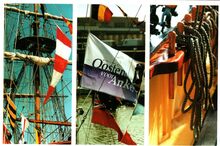
Tropic T 415. - (Oostende voor Anker). - Multikaart
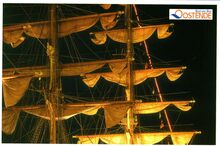
Tropic T 414. - (Oostende voor Anker). - Nachtopname
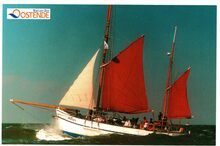
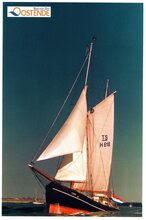
Tropic T 410. - (Oostende voor Anker)
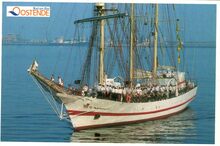
Tropic T 376. - (Oostende voor Anker)
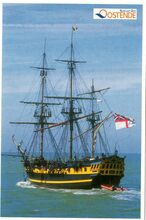
Tropic T 375. - (Oostende voor Anker)
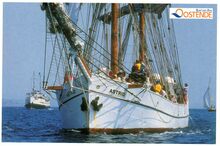
Tropic T 374.- (Oostende voor Anker)
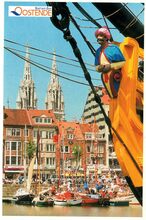
Tropic T 370. - (Oostende voor Anker). - Oostende anno 2001. Het boegbeeld van het zeilschip "Grand Turk" gemeerd in het eerste handelsdok tijdens Oostende voor Anker. Op de achtergrond, de Vindictivelaan en de torens van de Sint Petrus en Pauluskerk
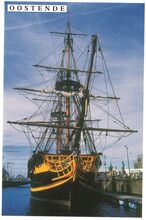
Tropic T 325. (Oostende voor Anker). - Het zeilschip "Grand Turk" nabij de Mercatorsluis tijdens Oostende voor Anker
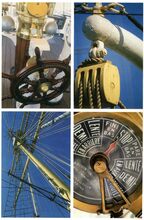
Tropic T 318. - (Oostende voor Anker). Multikaart
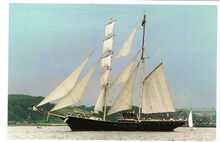
Tropic T 317. - (Oostende voor Anker)
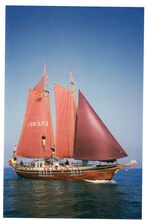
Tropic T 291. - Op het achterste zeil staat het nummer 158573

KUNSTSCHILDERS, KUNSTENAARS, SEYNAEVE EMILE (BEELDHOUWER), SIMON ALPHONSE (MARMERBEWERKER), STEYNS DÉSIRÉ (LERAAR TEKENAAR), SWINNEN E. (KUNSTSCHILDER), VAN BRANTEGHEM FELIX (BEELDHOUWER), VANDEMAELE JOĒL (PRIESTER KUNSTSCHILDER), VANDEWALLE L. (KUNSTSCHILDER), VANDEWALLE RAOUL (KUNSTSCHILDER), VAN DUYVENBODEN EMIEL (KUNSTSCHILDER), VAN HERENTHALS (KUNSTSCHILDER), VANHESTE LUCIEN (VERFHANDELAAR KUNSTSCHILDER), VAN LEKE (KUNSTSCHILDER), VANNITSEN FELIX (1890-) (KUNSTSCHILDER), VAN SASSENBROUCK ACHILLE (1886-1979) (KUNSTSCHILDER), VAN MOLLE VICTOR (1892-1952) (KUNSTSCHILDER), VERKOUILLE EMILE (1864-1927) (KUNSTSCHILDER)


Am 21 november 1954 würde der Folkloreverein De Plate an die Ostendener Kulturwelt vorgestellt.
Siebzehn getriebene Ostendiana-liebhaber gründeten den neuen Verein nach einen zwingenden Aufruf von Karel Seys, besser bekannt unter seinen Schrifstellernamen Ary Sleeks.. Dieser hatte bemerkt daß er einen außergewöhnlichen Responz erhielt bei einer Tagung die abgehalten wurde in september 1954 im Rathaus anläßlich des 350sten Jahrestages vom Ende der Belagerung von Ostende (1601 – 1604) durch die Spanische Armee..
Das schon verschwundene Kaffeehaus “ De Bierkelder” ( der Bierkeller) in die Christinastraat 116 fungierte als Taufbecken für den Neugeborenen.
Das Ziel war die allgemeine und lokale Folklore zu studieren und das Interesse hierfor zu fördern. Die Hilfsmittel dazu waren Vorträge, Studiumsversammlungen, Kontakte zu anderen Folkloristische Vereine, Studienreisen und die Einrichtung eines Folkloremuseums.
Der Sitz des Vereins war in die Parijsstraat14, die Wohnung von Karel Seys, der Archivar-Kassenführer wurde. Den ersten Vorstand wurde zusammengestellt, wobei Ernest De Taye, Vorsitzender, auch Obmann genannt, wurde. Willy Laforce übernahm die verantwortung des Sekretariats und Florimond Corsellis wurde musikalischer ratgeber. Frank Edebau und John Hermans amtierten als Aufsichtsratsmitglieder..
Der neue Verein hatte Erfolg und wurde am 18 april 1959 umgewandelt zu einer E.V. namens: “Oostendse Heemkundige Kring De Plate” (Staatsanzeiger vom 1 mai 1959).
Die Zielsetzung blieb dieselbe. Personen “beider Geschlechter” konnten ab ihr 18 lebensjahr als Mitglied aufgenommen werden ( die Altersgrenze ist mittlerweile aus die Statuten herausgenommen worden). Für 30 Franken war man aktives Mitglied, für 50 Franken Schützendes Mitglied und ab 100 Franken wurde man Ehrenmitglied. Die entscheidung den Verein ein gesetzliches Statut zu geben hatte unter anderen zur Folge daß der Kunstmaler Emiel Bulcke ein bedeutendes Legat an De Plate schenkte.
Vereine haben es oft schwierig geeignete Tagungsstätte zu finden und De Plate erging es nicht anders: von De Bierkelder ging es nach der Picadilly ( Leopold I Platz oder ’t Pèèrd, das Pferd, so wie dieser Platz durch die Ureinwohner von Ostende genannt wird), weiter nach Le Châtelet, Café de la Poste, das Rathaus, Die Normandie um schließlich 1974 gastfreund-lichkeit zu genießen in den Lokalen von “de Vlaamse Vereniging voor Familiekunde” (VVF), der Flämische Verein für Familienkunde.
Vorträge wurden abgehalten in der Picadilly, der Prinsenhof ( Alt-Ostende, jetzt Hertendale) in die Ieperstraat, später im Konferenzsaal des Rathauses um schließlich in die Räume der VVF zu landen..
Es bestand die notwendigkeit um eine eigene Zeitschrift heraus zu geben und Jef Klausing wurde der erster Chefredakteur. Sein Nachfolger wurde Omer Vilain und seit 1985 ist Jean Pierre Falise der Schriftleiter.
Vorsitzender und Gründungsmitglied Ernest De Taeye starb 1974 und sein Nachfolger wurde August Van Iseghem, Sprößling eines Geschlechtes das im laufe der letzten 250 Jahre die Stad Ostende einige sehr prominente Bürger geschenkt hat .
Ab 1975 trat der Verein in eine erneuerte Bewegung nach draußen. Treibende Kraft war der neue dynamische Schriftführer Jan-Baptist Dreesen.
Am 24 april 1999 übernahm Mitgründer Omer Vilain den Vorsitz, und am 30 märz 2005 wählte der Vorstand Jean Pierre Falise als neue Vorsitzender.
Folklore allein genügte nicht mehr und Volkskunde, Heimatkunde, örtliche Geschichte, Umwelterhaltung und Denkmalpflege wurden für den Verein sehr wichtige Themen.
Seit 8 juni 1996 wurde der Namen geändert in “Oostendse Heem- en Geschiedkundige Kring De Plate” (Ostendener Verein für Heimatkunde und (örtliche)Geschichte De Plate” Es wurde ein bedeutende Zielsetzung an die Statuten hinzugefügt nämlich die Verteidigung auf zu nehmen und eifern für den Erhalt, den Schutz und die Wiederherstelling des historisches mobiles und immobiles Patrimonium und Erbgut der Stadt Ostende und seine Umgebung. Es betrifft Denkmäler, Straßen, Plätze, Vierteln und Ortsnamen die als wertvoll betrachtet werden aus historischer, kultureller, landschaftlicher, städtebaulicher und archeologischer Sicht.
Am 21 november 2004 bekam der Verein vom belgischen König, anläßlich das 50jähriges bestehens des Vereines, die Zulassung ab diesen Tag die nahme “Koninklijke Oostendse Heem- en Geschiedkundige kring De Plate” zu tragen.

On the 21st of November 1954 the Folklore Society De Plate was established and presented to the cultural circles of Ostend.
Seventeen Ostend adepts of folklore and heritage founded the society at the instigation of Mr. Karel Seys, better known by his pseudonym, Ary Sleeks. He had noticed that he had received a big response on the occasion of a reading he had given at the time of the celebration of the 350th anniversary of the termination of the Siege of Ostend (1601-1604).
The founding meeting was held in the now extinct café "De Bierkelder" (Beercellar) in the Christinastraat 116.
The aims of the new society was to study the general and local folklore and to provoke interest in the subject. The means hereto were lectures, readings, study groups, contact with other related societies and groups, study outings and the establishment of a folklore museum.
The seat of the society was in the house of Mr. Karel Seys in the Parijstraat 16. Karel became the first archivist and treasurer. The initial board consisted of Major Ernest De Taeye, chairman, Willy Laforce, secretary,Florimond Corsellis, musical advisor, Frank Edebau and John Hermans, board members.
The society thrived and on the 18th of April 1959 the society was transformed into a corporate society and the name was forthwith changed to: "Ostend Local History Society De Plate".
The aims remained the same. Individuals of both sexes, from the age of 18 onwards could become a member, (since then this restriction has been erased from the rules and regulations).
The yearly membership fee was 30 Belgian francs for ordinary members, 50 francs for patronage members and 100 francs for honorary members. The decision to become a corporate society had as first result that an important legacy by painter Emiel Bulcke could be legally accepted.
Societies and clubs have more than often difficulty in finding suitable meeting rooms, the De Plate was no exception. From "De Bierkelder" the society moved to "The Picadilly", subsequently to "Le Chatelet", "Café de la Poste", the town hall, the "Normandie" and finally they were fortunate to be able to accept the offer from the local Genealogical Society (the Flemish Genealogical Society, Ostend Branch) to use their premises.
Lectures and readings were held in "The Picadilly", in the "Prinsenhof" and later in the Conference Room of the town hall, to end up in the conference room of the genealogical society.
The need to have a monthly newsletter was most strongly felt and the late Jef Klausing became the first editor. He was succeeded by Omer Vilain and since 1984 by Jean Pierre Falise, who is also the present chairman.
Chairman co-founder Ernest De Taeye died in 1974 and he was succeeded by August Van Iseghem, a descendant of a distinguished Ostend family. Members of which became burgomasters or held other high ranking appointments and commissions.
On the 24th of April 1999 his task was taken over by Omer Vilain, a co-founder and member of the board.
He was in turn succeeded by Jean Pierre Falise on the 30th of March 2005.
Le cercle folkorique de l' histoire Ostendaise fut présenté au public le 21 novembre 1954.
Dix-sept passionnés d'Ostendiana créèrent une nouvelle association sous l'impulsion de Karel Seys, mieux connue sous son nom d'auteur Ary Sleeks. Ce dernier avait remarqué qu'il y avait eu un grand intérêt du public lors de la célébration du 350-ième anniversaire de la fin du siège d'Ostende (1601-1604).
L'établissement "De Bierkelder", dans le temps rue Chrsitine 119, devinrent les fondsbaptismaux de l'association.
Le but était de contribué à l'étude générale du folklore local. Les seuls moyens en étaient d'organiser, des réunions d'études, de contacter d'autres centres folkloriques, des déplacements d'études et l'organisation d'un musée folklorique.
Le local de la société était rue de Paris 14 au domicile de Charles Seys qui en devint archiviste et trésorier. Le premier président du comité fut Ernest De Taeye, le secrétariat fut confié a Willy Laforce et Florimond Corsellis devint adviseur musical. Les nommés Frank Edebau et John Hermans se chargèrent des fonctions de commissaires.
La nouvelle association pris son essor et le 18 avril 1959 le cercle devint une ASBL, sous le nom de "Oostendse Heemkundige Kring De Plate" (moniteur du 1 mai 1959).
Les buts restèrent inchangés. Les personnens "des deux sexes" pouvaient êtres admises à partir de 18 ans (cette limite d'âge à disparu et net parait plus dans les statuts). Pour la somme annuelle de 30 fr. on devint membre effectif , pour 50 fr. membre protecteur et pour 100 fr. membre d'honneur. La décision de donner un statut légal eut pour résultat que l'artiste peintre Emile Bulcke offrit un important légat au cercle De Plate.
Les sociétés ne trouvent souvent pas de places idéales pour leurs réunions et "De Plate" subit le même sort. De l'établissement "De Bierkelder" elle alla au Picadilly (place Léopold I mieux connu par les Ostendais sous le pseudonyme "'t Peerd") ensuite au "Châtelet", Café de la Poste, l'hôtel de ville, le "Normandie" et enfin elle put jouir en 1974 de l'hospitalité de l'association de généaologie locale ou Vlaamse Vereniging voor Familiekunde (V.V.F.).
Les conférences eurent lieux au "Picadilly", au Prinsenhof (Oud Oostende, actuellement Hertendale, rue d'Ypres), la salle de conférence de l'hôtel de ville pour atterrir enfin dans les locaux de la société de généalogie (V.V.F.).
Il devint nécessaire d'émettre une publication et ce fut Jef Klausing qui en devint de rédacteur en chef. Il fut suivit par Omer Vilain et depuis 1985 c'est le président Jean Pierre Falise qui en a pris la charge.
Le président-fondateur Ernest De Taeye décéda en 1974 et fut suivit par Auguste Van Iseghem, issu d'une génération qui durant plus de 250 ans fournit de nombreux citoyens célèbres à la ville. Le 30 avril 1999 le co-fondateur Omer Vilain reprit le flambeau et le transmis à son tour le 30 mars 2005 à Jean Pierre Falise.
Depuis 1975 l'association pris une nouvelle envergure sous la force propulsive du secrétaire Jean-Baptiste Dreesen. Le folklore ne suffisait plus, l'ethnologie, l'histoire locale, la protection des sites et monuments prirent une grande importance.
Depuis le 8 juin 1996 le nom est devenu "Oostendse Heem- en Geschiedkundige Kring De Plate" et de nombreux buts ont été ajoutés, à savoir, la défense et la propagande pour le maintien, la protection et l'entretien du patrimoine historique de la ville et de la région d'Ostende. Cela comprent les monuments, rues, places, quartiers et leur nom et qui peuvent avoir une importance historique, culturelle, architecturale ou archéologique.
Le cercle devint Royale en 2004.
Op 21 november 1954 werd de folklorekring De Plate aan de Oostendse cultuurwereld voorgesteld.
Zeventien gedreven Ostendiana liefhebbers stichtten de nieuwe vereniging na een dwingende oproep van Karel Seys, beter gekend onder zijn auteursnaam Ary Sleeks. Deze had opgemerkt dat hij een buitengewone respons had gekregen op de vergadering die hij in september 1954 had belegd in het stadhuis naar aanleiding van de 350ste verjaardag van het einde van het Beleg van Oostende (1601-1604).
Het reeds verdwenen koffiehuis De Bierkelder in de Christinastraat 116 fungeerde als doopvont voor de boreling.
Het doel was de algemene en lokale folklore te bestuderen en de belangstelling hiervoor te bevorderen. De hulpmiddelen daartoe waren voordrachten, studievergaderingen, contacten met andere folklorekringen, studiereizen en de inrichting van een folkloremuseum.
De zetel van de vereniging werd de Parijsstraat 14, de woonst van Karel Seys, die archivaris-penningmeester werd. Het eerste bestuur werd samengesteld waarbij Ernest De Taeye voorzitter, ook hoofdman genoemd werd, Willy Laforce nam de taak van secretaris op zich en Florimond Corsellis werd muzikaal adviseur. Frank Edebau en John Hermans fungeerden als commissarissen.
De nieuwe vereniging floreerde en op 18 april 1959 werd de kring tot een vzw omgevormd met als naam: "Oostendse Heemkundige Kring De Plate" (staatsblad van 1 mei 1959).
De doelstelling bleef dezelfde. Personen "van beide geslachten" konden vanaf 18 jaar als lid opgenomen worden (deze leeftijdsgrens is ondertussen uit de statuten verdwenen). Voor 30 frank was men werkend lid, voor 50 frank beschermend lid en vanaf 100 frank werd men erelid. De beslissing om de kring een wettelijk statuut te geven had ondermeer voor gevolg dat kunstschilder Emiel Bulcke een belangrijk legaat schonk aan De Plate.
Verenigingen hebben het dikwijls moeilijk geschikte vergaderplaatsen te vinden en De Plate verging het niet anders: van De Bierkelder ging het naar de Picadilly (Leopold I -plein of 't Pèèrd zoals dit door de Oostendenaar wordt genoemd), naar Le Châtelet, Café de la Poste, het stadhuis, de Normandie om uiteindelijk in 1974 gastvrijheid te genieten in de lokalen van de Vlaamse Vereniging voor Familiekunde (VVF).
Voordrachten werden gehouden in de Picadilly, het Prinsenhof (Oud Oostende, nu Hertendale) in de Ieperstraat en later de conferentiezaal van het stadhuis om uiteindelijk in de lokalen van de VVF te belanden. De noodzaak werd aangevoeld om een eigen tijdschrift uit te geven en Jef Klausing werd de eerste hoofdredacteur. Hij werd opgevolgd door Omer Vilain vanaf 1984 Jean Pierre Falise, in 2019 werd Koen Verwaerde redactiechef en in 2024 nam Niels Delbaere de functie over.
Voorzitter-medestichter Ernest De Taeye overleed in 1974 en hij werd opgevolgd door Auguste Van Iseghem, telf uit een geslacht dat in de loop der laatste 250 jaar de stad Oostende enkele zeer prominente burgers geschonken heeft. Op 24 april 1999 nam Omer Vilain, mede-stichter, het voorzitterschap. Hij gaf de fakkel door een Jean Pierre Falise op 30 maart 2005. In 2020 werd secretaris Nadia Stubbe voorzitter van de vereniging.
Vanaf 1975 trad de kring in een vernieuwde beweging naar buiten. Stuwende kracht was de nieuwe dynamische secretaris Jan-Baptist Dreesen. Folklore alleen was niet meer voldoende en volkskunde, heemkunde, lokale geschiedenis, milieubehoud en monumentezorg werden onderwerpen die voor de kring zeer belangrijk werden.
Sedert 8 juni 1996 is de naam gewijzigd in "Oostendse Heem- en Geschiedkundige Kring De Plate" en werd een belangrijke doelstelling aan de statuten toegevoegd nl. de verdediging opnemen van en ijveren voor het behoud, de bescherming en het herstel van het historisch roerend en onroerend patrimonium en erfgoed van de stad en regio Oostende. Daaronder vallen monumenten, straten, pleinen, buurten en plaatsnamen die waardevol geacht worden vanuit historisch, cultureel, landschappelijk, stedenbouwkundig en archeologisch oogpunt.
In november 2005 bestond de kring 50 jaar en de naam werd opnieuw gewijzigd in "Koninklijke Oostendse Heem- en Geschiedkundige Kring De Plate".
Langestraat 69, 8400 Oostende.
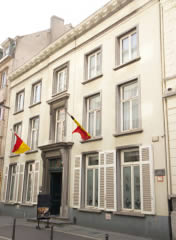
A description of the "DE PLATE" is not possible without a word about the museum.
The highly rated collections of the museum were started when alderman A Liebrecht took the initiative to let an old shop in the Kerkstraat in Ostend and opened an folklore museum. The building was demolished in 1902 for the purpose of extending the adjoining primary school named: Albert School.
The museum was relocated in a building in the Maria-Hendrika Park which also housed the curator.
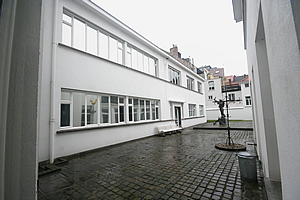
The museum was dosed down when the Great War started in August 1914 and did not reopen until 1932, which to say the least, were not the most prosperous years (Or the museum collections.
On Whitsun 1932 the museum was reopened,. yet again in a new location, this time in an old fortress, the so called "Fort Napoleon", under the drive of the town archivist Carlo Loontiens.
However, the start of the Second World War, in May 1940, was the spoil-sport. Due to the occupation of the fort by German forces, the museum collections had to be moved out They were stocked in the cellars of the then new Ostend Courthouse. 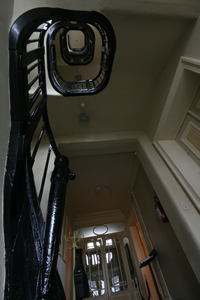
Town archivist and later co-founder of the Historical Society. Frank Edebau, in 1948 opened on basis of the collections, a small museum in the Royal Gallery (Koninklijke Gaanderijen). This again had to be soon vacated when the reconstruction, after war damage, was commenced. The collections were then initially stored in the attic of a school in the Witte Nonnenstraat. When this was taken in use again after repair of war damage, the collections had once again to moved, and were stored in an old warehouse on the waterfront of the old commercial basins.
There exposure to the bad weather elements and "loose fingers" took their toll.
After the founding of the Historical Society. it took the initiative to move the collections to a more protected and safer place in the newly built Cultural Palace in the market place .In 1963, with the co-operation of the town council, a museum was opened in the "Chez Pan", a vacant area annexed to the communal theatre. At this occasion the collection of the society was added to the collection of the city.
Knowing of the eminent demolition of the theatre and adjoining buildings, to dear the way for the erection of the "skyscraper": "Europacenter", the collection had to move again. This time the town council allocated space on the second floor of the new Town Hall, where, in 1966, the museum reopened for the fifth time.
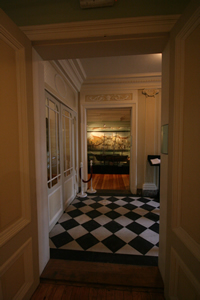
In 1970 the museum was relocated again, this time to the first floor of the Cultural Palace in the market place. However, to the dismay of the society, on the 10th of January 2000, the museum had to close its doors, and the collections removed from the building.
The seventh chapter in this century old story was commenced, when the town council, on the insistent demands of the society. rented the former royal residence in the Langestraat 69, and assigned the building to the Historical Society. for the purpose of housing the historical museum. After many difficulties , the museum was opened to the public on Saturday the 9th of February 2002.
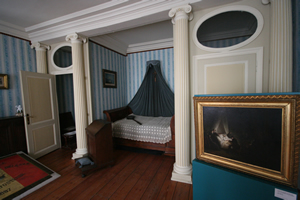
The museum is still in full development. As yet only the fishery section, carts and borrows, Ostend historical, the "fisherman's public house" and "fisherman's family dwelling", is open to visitors, as well as the former "night accommodations room", where the first queen of the Belgians died in.bed in October 1850. The general management was formally lead and directed by Mr. Norbert Hostyn, art historian and curator of the town museums, until 2008. From 2009 .the cultural department of the town council took over. The daily running of the museum is in the hands of the Royal Folkloric and Historical Society De Plate.